FOUNDER’S STORY
The Right to Dream
A personal story from Asafa Collective’s Founder about imagination, opportunity, and building what should already exist.
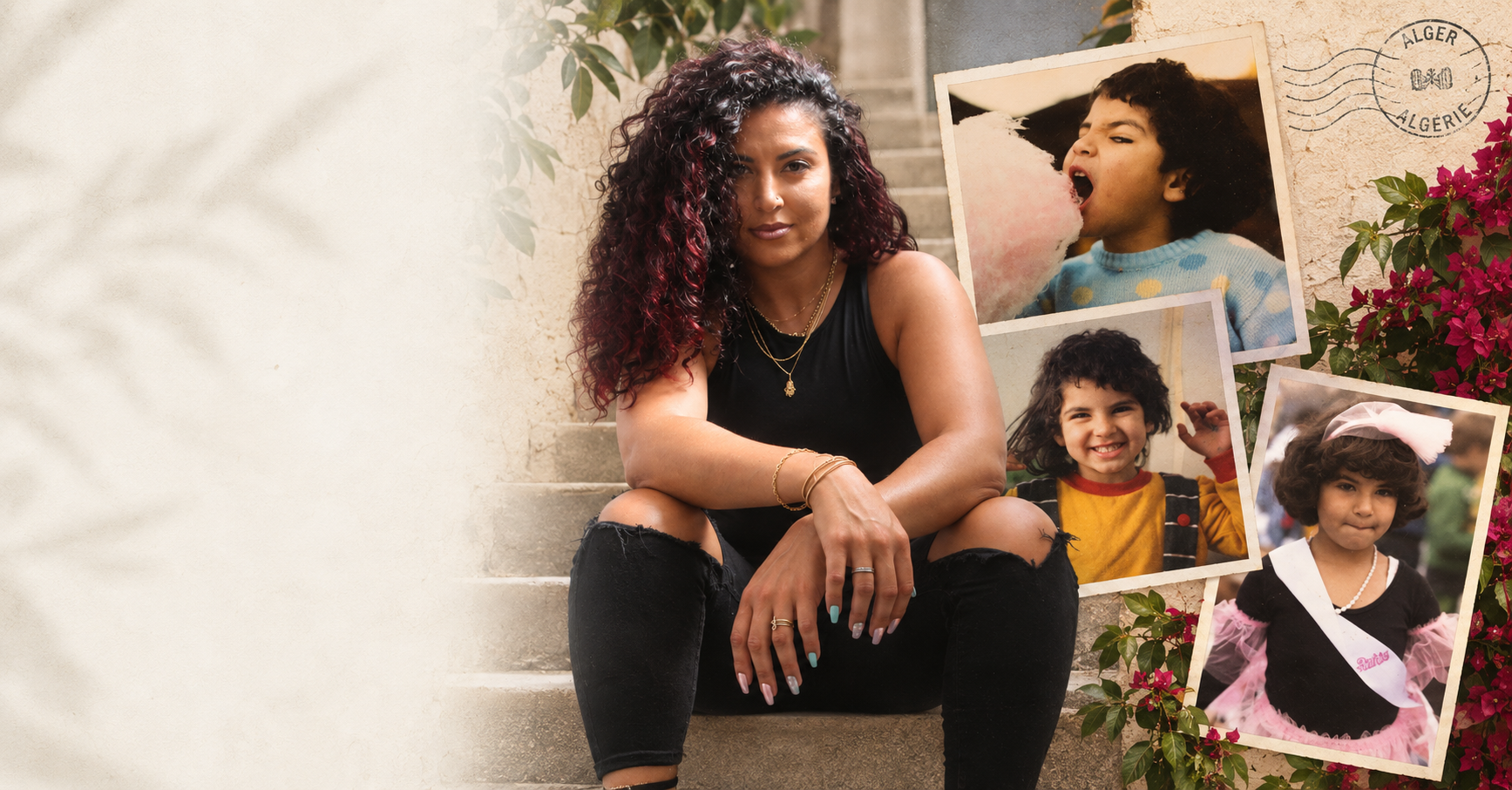
By Louiza Doran, Founder & Co-Executive Director
September 18, 2026
hen my mother was six years old, her mother asked what she wanted to be when she grew up.
W
My mother then told my grandmother she wanted to be a maid for a French family.
My grandmother threw her shoe across the room.
I know, I know, but stay with me.
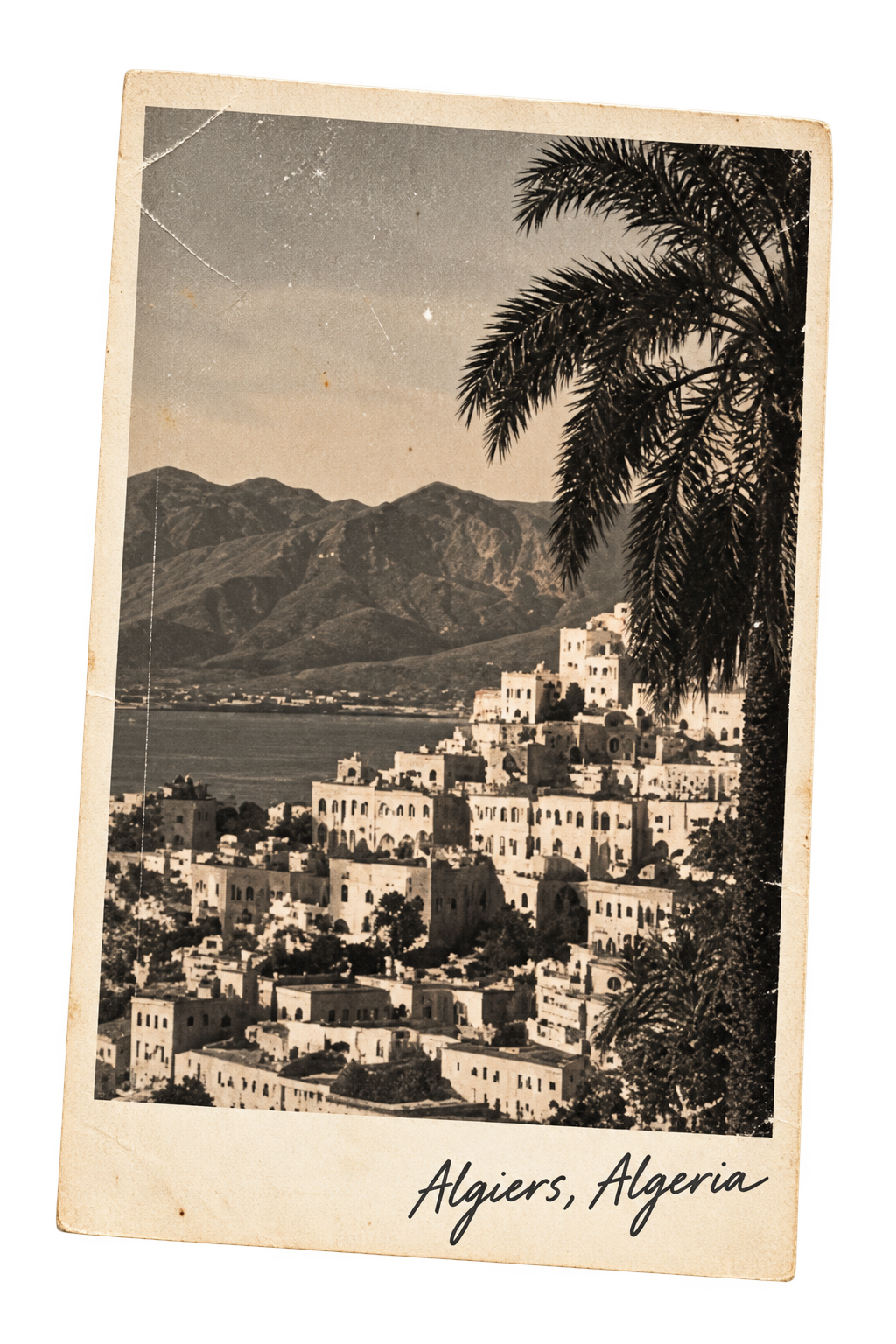
My mother was born in Algeria during French occupation into a world that communicated very clearly to Indigenous Algerians where they belonged—and, perhaps more importantly, where they did not.
She never saw people like her as doctors or lawyers or teachers or business owners. The adults around her worked in positions the French considered “beneath them”: cleaners, bakers, manual labor and service workers.
So when my grandmother asked what she wanted to be, my mother wasn't failing to dream big enough; she was dreaming as big as the world around her taught her was possible.
She wanted to work. She wanted to earn her own money. She wanted independence.
And from the vantage point of a six-year-old Indigenous girl living under colonial rule, being welcomed into a French family's home represented proximity to a world she had been taught was better than her own.
Years later, my mother explained it to me this way:
"We were nothing, and they were everything. And at the time, I believed if you were allowed in their homes, then that made you something."
I have carried those words with me for most of my life.
There is something devastating about realizing a child's imagination can be colonized long before they have the language to understand what is happening to them. Before they know words like “oppression” or “inequity” or “systemic exclusion”, children are already taking inventory of the world. They are noticing who seems important. Who gets listened to. Who has money. Who owns things. Who gets to rest. Who goes to college. Who holds certain jobs. Who appears to have choices.
And, quietly, they are figuring out where they fit in society, by what they see.
We like to tell children they can become anything. I believe deeply in affirming this to them.
But I also think we have to be willing to ask a harder question:
What have we built around children that gives them reason to believe us?
That question sits at the heart of Asafa Collective.
After Algeria gained independence in 1962, my mother's world began to change. Not overnight—because liberation rarely works that way—but the boundaries around what she could imagine for herself began to move.
She returned to school, and eventually attended university, earning a degree in psychology.
And more importantly, she wasn't simply told to work hard and figure the rest out.
Why? Because higher education was free and students received financial support for books, transportation, and other necessities so they could actually be fully present and participate in their education. Because someone understood that access to a classroom means very little if the conditions in your life prevent you from being able to learn inside of it.
Decades after that little girl told her mother she wanted to clean someone else's home, my mother became a teacher in Berkeley, California.
What moves me about her story isn't that she achieved some conventionally impressive version of success. It is that she was eventually given room to choose.
For the first time in generations, people in my family could become the architects of their own possibility. I think there is an important distinction.
My mother's potential did not suddenly appear after Algerian independence. Her intelligence did not arrive with a change in government. Her ambition wasn't bestowed upon her by a university. Her capacity had been there all along.
What changed were the conditions surrounding it.
That distinction has shaped nearly everything I believe about young people.
I have spent well over two decades working with youth and young adults in education, mentorship, coaching, healing, and community spaces, and I have watched us, as a collective society, make the same mistake over and over again.
We spend an extraordinary amount of time celebrating resilience in young people while doing far too little to change the circumstances requiring them to be so resilient in the first place.
We tell them to dream big. Work hard. Stay focused. Make good choices. Go to school. Build a career. Break the cycle.
Then we send kids into adulthood carrying housing instability, financial insecurity, trauma, inadequate support systems, limited professional networks, gaps in basic life skills, and institutions never designed with them in mind.
When they manage to succeed anyway, we hold them up as evidence that anything is possible.
When they struggle, we call it a failure of motivation. I reject that framework entirely.
Young people do not need to be rescued. They need to be resourced.
There is a fundamental difference.
The young people we work alongside are not problems waiting for someone to solve them. They are human beings.
They are funny and complicated and brilliant and occasionally frustrating. They have ideas and fears and contradictions. They have gifts they haven't even discovered yet.
Some of them know exactly what they want their lives to look like. Some have absolutely no idea. Both are allowed. Part of growing up is supposed to be figuring it out.
But figuring yourself out requires a luxury we don't talk about: having enough stability to have the mental and emotional space to wonder:
Who am I?
What am I good at?
What do I care about?
What kind of life do I want?
What am I curious about?
What might I become?
Those questions are considerably harder to ask when the more immediate questions are: Where am I sleeping? What am I eating? How am I getting to work tomorrow? How am I paying this bill? Who can I call if something goes wrong?
It is difficult to contemplate who you want to become when survival is consuming the imagination required to become them.
And this is where I think so many of our traditional approaches to youth development fall short.
A scholarship may pay tuition, but it doesn't necessarily pay rent.
A career program can teach someone a skill, but it doesn't automatically provide transportation, mental health support, mentorship, community, food, professional networks, financial literacy, or someone to call when adulthood inevitably gets messy.
A mentor can offer advice, but advice can't fix housing insecurity.
We have a tendency to separate people's lives into neat categories because it makes programs easier to design and funding easier to explain. Human beings, unfortunately for grant applications, refuse to cooperate with that model.
Life happens all at once.
Education, housing, mental health, identity, relationships, money, physical health, purpose, belonging are all happening to the same person at the same time.
We address one obstacle while the young person in front of us is experiencing all of them.
Human beings are holistic. Our solutions should be, too.
That belief became Asafa Collective.
I wanted to build what I believed should already exist, and I kept returning to one question: What would it look like to surround a young person with enough support that survival was no longer consuming all of the energy they needed to build a life?
Not to decide life for them. That distinction matters enormously to me. I have no interest in replacing one set of expectations about who young people are supposed to become with another set we happen to find more respectable. College may be part of someone's future. It may not.
Success might mean becoming a professor, an electrician, a physician, an artist, an entrepreneur, an educator, an athlete, a first responder, a mechanic, a parent, a community leader, or something neither of us has thought of yet.
Personal sovereignty means that destination belongs to them.
Our responsibility is to make sure there are actual pathways from where they are to wherever they decide they want to go. That is why Asafa Collective's work has never been just one scholarship, one class, one mentor, or one intervention. We are trying to build an ecosystem.
Through the Anaz Fellowship, we create stability and individualized support for young people pursuing education, vocational training, careers, and the lives they are building.
Through Azima Athletics, physical training becomes about something larger than exercise. It becomes a place to experience your own strength, practice discipline and accountability, build confidence and resilience, and learn, repeatedly, that your body and mind are capable of doing difficult things.
And through The Library, we are creating a community space rooted in knowledge, cultural memory, curiosity, belonging, and imagination, a place where people can encounter stories that reflect them alongside ideas that expand what they believe is possible.
The programs look different because human needs look different. The belief underneath them is the same:
People deserve the resources to become the architects of their own possibility.
I understood something about that long before I knew Asafa Collective would exist.
When I was fourteen, I read Frantz Fanon's The Wretched of the Earth for the first time.
I did not understand all of it. I was fourteen. But I understood enough.
I spent my childhood listening to stories about my ancestors. I knew about resistance. I knew what people before me had endured so generations after them might experience possibilities they themselves could barely imagine.
And somewhere in the meeting place between those stories and Fanon's words, I began to understand liberation differently. Liberation could not only mean freedom from something. It also had to mean freedom to something.
Freedom to imagine.
Freedom to choose.
Freedom to become.
Freedom to change your mind.
Freedom to build a life no previous generation could have designed for you because perhaps they had never been given the opportunity to imagine it themselves.
That is why I believe the right to dream is not frivolous. It is fundamental.
Before anything new can be created in the material world, someone must first be able to imagine something beyond what already exists.

"Liberation requires imagination.”Liberation requires imagination.
My grandmother understood this before my mother did.
That shoe flying across the room wasn't really about whether being a maid was respectable work. There is dignity in work, and the problem was never the work itself.
The problem was that colonialism had reached so deeply into my mother's imagination, she could not yet conceive of a world in which she stood at the center of her own life.
My grandmother's anger was the anger of someone who could see a larger horizon for her daughter than her daughter had yet been permitted to see for herself.
She wanted more for her. My mother wanted more for me.
And I want more for the young people coming behind us.
Not more as measured by prestige or income or proximity to someone else's definition of success.
More freedom.
More choices.
More stability.
More knowledge.
More community.
More room to explore.
More opportunities to discover just how expansive their lives can become. This is where the word collective becomes particularly important to me. None of us builds a life alone.
We love the mythology of the self-made person in this country, but if you pull on that story for even a moment, it falls apart.
Someone taught us.
Someone fed us.
Someone watched our children.
Someone recommended us.
Someone gave us information we didn't know we needed.
Someone opened a door.
Someone gave us another chance.
Someone made a phone call.
Someone wrote a check.
Someone said, I know a person.
Someone looked at us before we could fully see ourselves and said, “There is more available to you than this.”
I can trace my own life backward through hundreds of those moments. Most of us can. Sometimes an entire life changes because enough people decided that another person's future mattered to them.
So when I talk about Asafa, I am not talking about charity. I am talking about community. I am talking about responsibility. I am talking about collective liberation.
The work does not belong only to our staff or the people whose names appear on our website. A functioning ecosystem needs mentors and coaches and therapists and educators. It needs employers willing to open doors and community organizations willing to share resources. It needs people with specialized skills and people with relationships and people with time. It needs donors whose dollars create the stability that allows everything else to happen.
It needs people willing to ask, “What do you need?” And then stay long enough to hear the answer.
My mother was once a little girl who could only dream as far as the world allowed her to see. Today, her daughter gets to build something dedicated to expanding how far other young people can see. I do not take the symmetry of that for granted.
Asafa Collective is one way I honor the people who came before me. But more importantly, it is one way I help light the path for the people coming next.
Because somewhere right now is a young person whose imagination has been shaped by the limits of their circumstances.
There are things they haven't dreamed yet because they don't know those things belong to them. There are versions of themselves they haven't met. Rooms they don't know they can enter. Tables they don’t know they can sit at. Questions they haven't had the safety to ask. Lives they don't yet have the language to imagine. I don't want Asafa Collective to tell them what to dream. I want us to widen the horizon.
I want us to help create enough safety, stability, knowledge, resources, community, and opportunity that a young person can look beyond the life immediately in front of them and wonder:
What else might be possible for me?
And then have somewhere to turn when they're ready to find out.
That is what I believe. That is why I founded Asafa Collective. And more than anything, that is the world I hope we can build together.
One where every young person has not only the right to dream, but the support, resources, and freedom to discover just how far that dream can take them.
With love and determination,
Louiza “Weeze” Doran
Founder, Asafa Collective
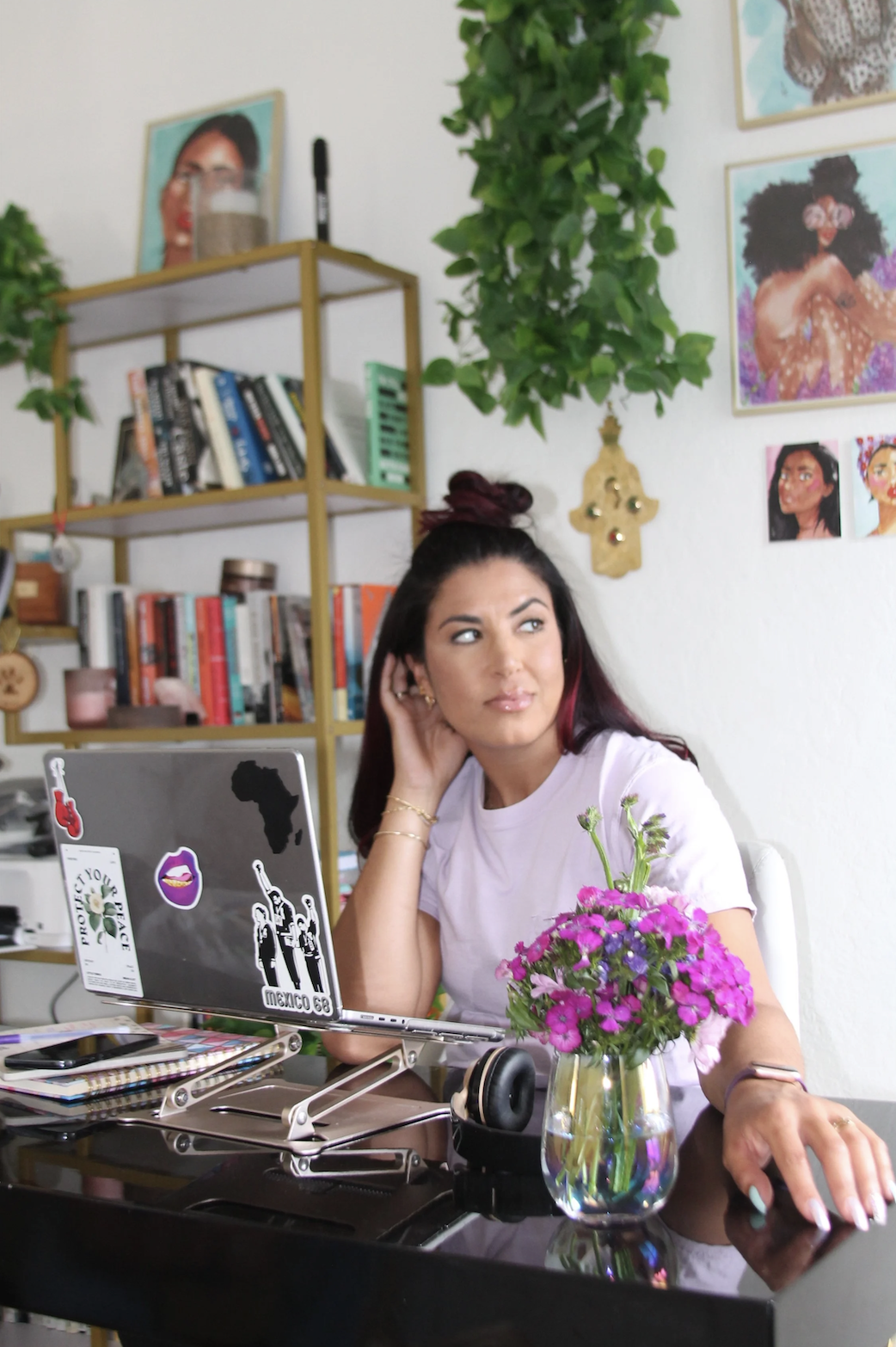
Louiza “Weeze” Doran is the Founder of Asafa Collective. For more than two decades, she has worked with youth and young adults in education, mentorship, coaching, healing, and community spaces. Her work is rooted in the belief that people deserve the resources to become the architects of their own possibility.
Get to Know Weeze